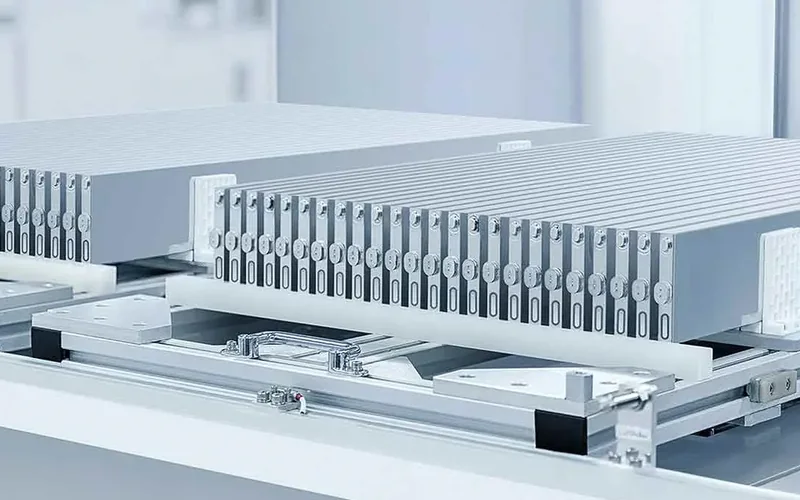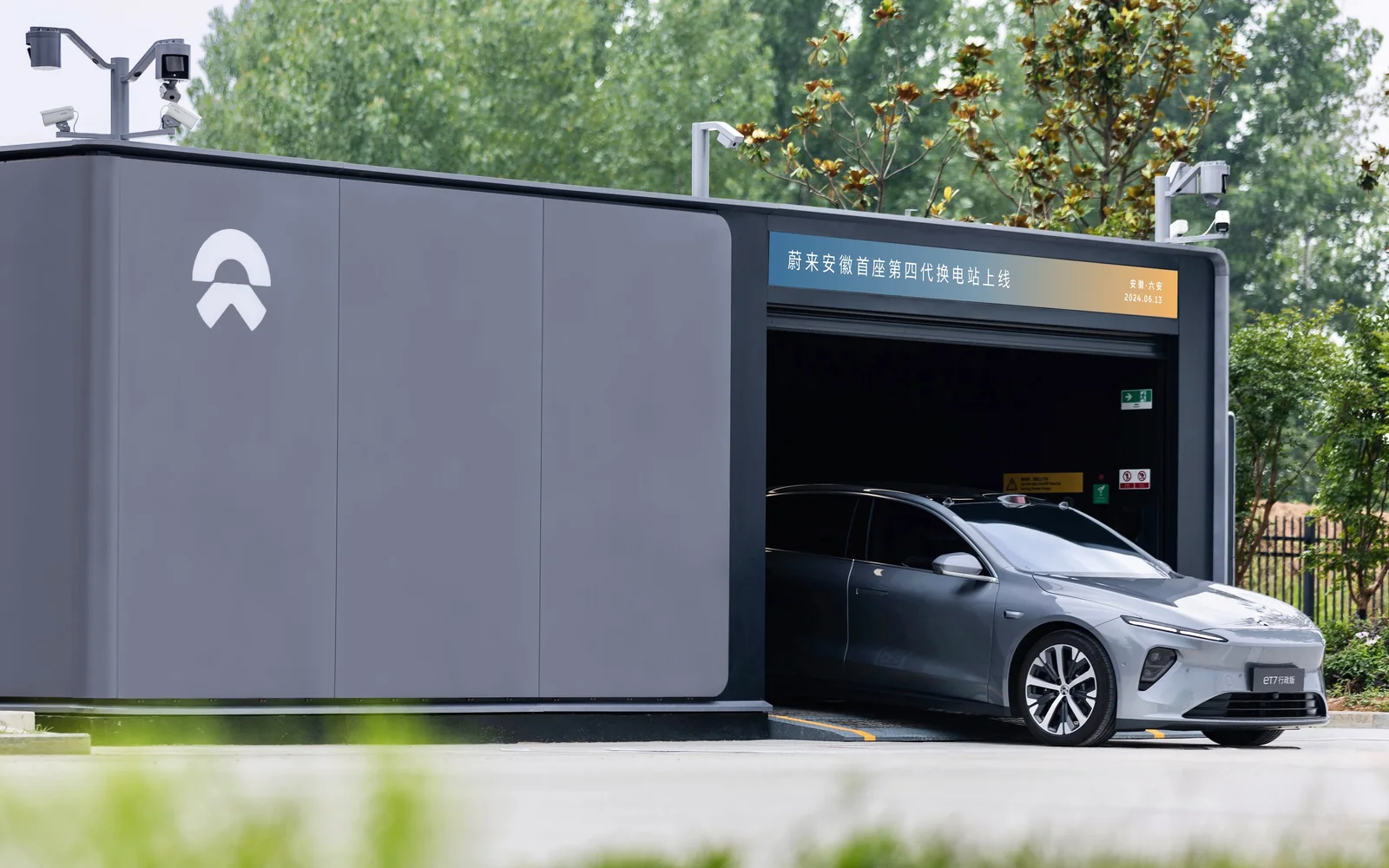
Battery swapping replaces a car’s flat battery with a charged one at a robotic station, so the driver is back on the road in minutes rather than waiting at a charger. It is an everyday option for millions of drivers in China. In Britain there is no equivalent for private cars, and the first concrete plan is for heavy lorries.
Where it is in China
Nio runs the biggest car network. By 7 August 2026 its charging map showed 4,006 swap stations in China, according to CnEVPost, and the company completed its 120 millionth swap that day, about six months after passing 100 million in February. Around 1,049 of those stations sit along motorways. Nio says 80.1% of its urban users have a station within three kilometres of home or work.
The 4,000th station, in Quanzhou, was also the first of Nio’s fifth-generation design. Electrive reports that the new stations adjust themselves for cars of different sizes, which lets the small Firefly hatchback use swapping for the first time. Nio, Onvo and Firefly cars now share one network.
CATL, the battery maker, is building a second network under the Choco-swap name, serving mainly passenger cars and light trucks. CATL said on 1 July 2026 that it had reached 2,000 stations in 180 cities, up from 1,020 at the end of 2025, and was adding more than 200 a month. Its target for the end of 2026 is more than 3,000.
Lorries are the fastest-growing use. CATL’s heavy-truck swapping arm, Qiji Energy, had about 305 stations in China at the turn of 2025–26, and CATL plans to reach 900 during 2026, CnEVPost reports. The pitch is cost: the operator does not buy the battery with the truck, and a swap takes minutes instead of close to an hour on a charger.
Where it is in the UK
The one firm plan is Swaptopus, a joint venture between Octopus Energy and CATL announced in London on 22 June 2026. It is for electric heavy goods vehicles, not cars.
- First UK hubs are expected to open in 2027.
- More than 30 sites are planned by 2035. CnEVPost describes these as covering the UK’s core trunk routes; Electrive describes them as across Europe. The companies have not published a site list.
- Octopus says the network could support more than 300,000 electric lorries and unlock over £30 billion of private investment. Those are the companies’ own projections.
- CATL’s head of overseas investment, Oscar Luo, said the system can swap a truck battery of more than 500 kWh in five minutes.
For private cars, neither of China’s two big operators has announced a UK network. Electrive reported in August that Nio is not adding swap stations in Europe for now and is moving to a less capital-intensive, partnership-based approach there, so its European network is likely to stay at its current size. CATL’s international swapping plans, as reported by CnEVPost, are the UK lorry venture and a small start in Hong Kong, where its first two stations are running.
Why it has not spread here
Swapping pays off when many vehicles share the same battery packs and there are enough of them nearby to keep stations busy. Nio’s own figures show the scale it took in China: thousands of stations and tens of millions of swaps a year. Lorries reach that kind of use faster, because fleets run fixed routes and lose money for every hour a vehicle stands still. That is why the first UK attempt starts with heavy goods vehicles rather than cars.
What it means for UK buyers
For car buyers, nothing changes in the near term. Neither Nio nor CATL has announced swap stations for cars in Britain, so plan on plug-in charging for any EV you buy here. Treat any suggestion that a car’s battery can be swapped in the UK with caution unless the maker names real UK stations.
For haulage, the picture is more interesting. If Swaptopus opens its first hubs on schedule in 2027, the UK will become a test of whether China’s lorry-swapping model works on European roads. Things still not known: exact locations, which truck makers will build compatible lorries, prices for operators, and how the scheme fits with UK charging policy. We will update this tracker when those details are published.