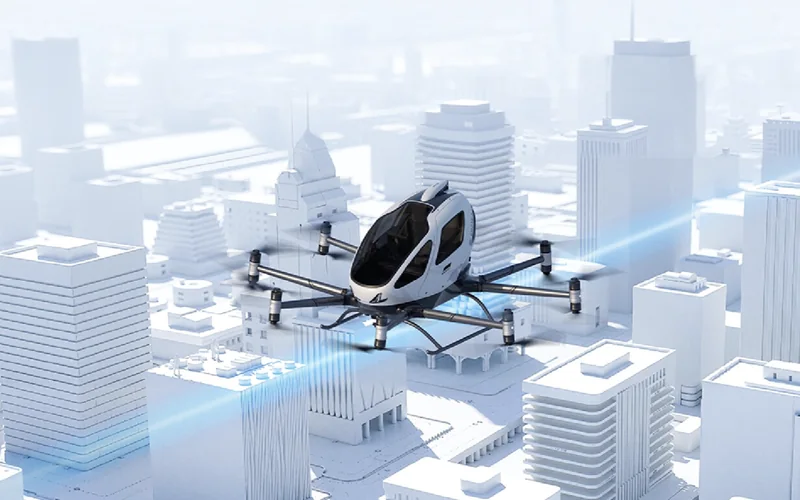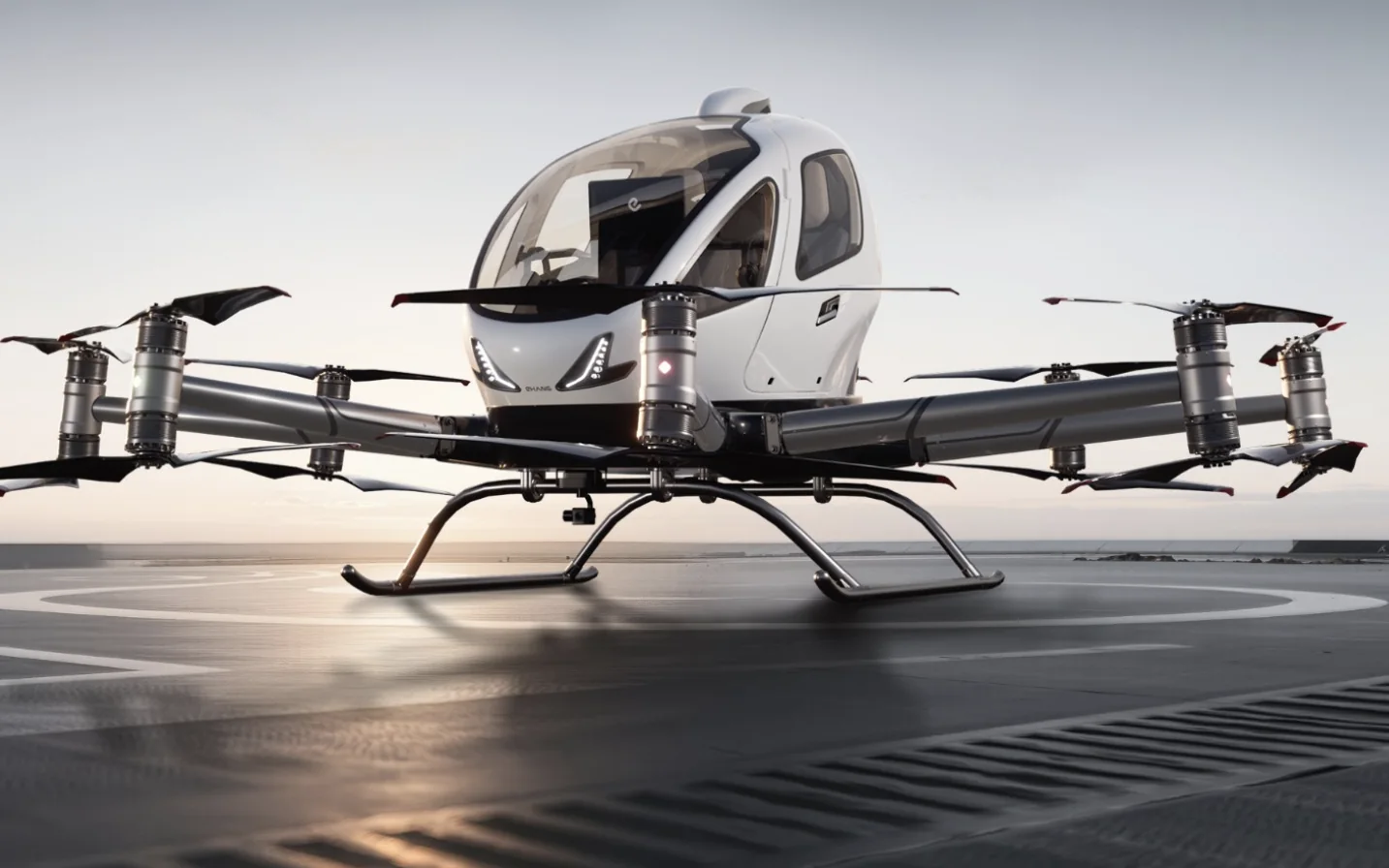
EHang, the Guangzhou company behind the pilotless EH216-S passenger drone, has withdrawn its full-year revenue guidance for 2026 and is not offering a replacement. The decision, announced with its second-quarter results on 25 August, reflects a slower and more cautious approach by Chinese regulators to approving paid passenger flights.
The EH216-S was the first pilotless passenger eVTOL to receive a type certificate from the Civil Aviation Administration of China (CAAC), in October 2023, and it also holds production and standard airworthiness certificates. Aviation Week notes that, nearly three years on, the start of commercial passenger services in China remains uncertain.
Why the forecast was pulled
In its results, EHang linked the regulators’ caution to recent safety incidents in the wider industry, including a late-June accident involving a piloted light-sport aircraft in China. Caixin Global reported that tighter rules after a fatal crash in Beijing had delayed the commercial launch of passenger operations. EHang said it would update its outlook once there is more clarity from regulators.
Chief executive Huazhi Hu described the setback as “a temporary adjustment in industry pace, not a change in market demand”.
The numbers show the effect. Revenue for the three months to 30 June was RMB 77.9 million (about £8.4 million at 7 Nov 2026 rates), down 31.3% on the same period of 2025, though up 203.5% on the first quarter. EHang delivered 35 EH216-series aircraft and one of its longer-range VT35 models, compared with 52 EH216s a year earlier. The net loss widened to RMB 128.3 million (about £13.8 million), and the company held RMB 929.4 million (about £100 million) in cash and short-term investments at the end of June.
Operations so far
EHang holds two air operator certificates, covering sites in Guangzhou and Hefei, where it says routine trial operations have run safely for 17 months. It is now testing its first point-to-point route, internally, at its Guangzhou headquarters, as it moves from single-site operations towards A-to-B routes.
Looking abroad
With approvals at home slower than hoped, EHang is putting more weight on overseas regulatory sandboxes. On 30 October it announced a regional hub in Thailand, with a planned initial fleet of 25 EH216-S aircraft; in August it had said it aims to secure a commercial operating certificate there within 2026. Demonstration flights are planned for an ICAO advanced air mobility symposium in Bangkok in December.
The company’s other plans, as it describes them, include:
- Sri Lanka: sandbox and validation flights at Port City Colombo in November, with commercial operations targeted by the end of the year.
- Vietnam: validation flights in a Hanoi sandbox area in November.
- Malaysia: a first EH216-S demonstration flight in Putrajaya in November.
- Hong Kong: selection for trial projects in a low-altitude economy regulatory sandbox.
EHang says the EH216 series has now flown in 23 countries. All of these timelines are the company’s own targets and depend on local approvals.
What it means for the UK
There is no announced plan to bring the EH216-S to the UK, and nothing suggests one soon. The UK government’s target, set out in a recent Civil Aviation Authority report, is piloted eVTOL operations from 2028, so a pilotless aircraft like EHang’s would face a longer path here than in the markets it is now targeting.
The bigger lesson is that a type certificate is not the finish line. Even in China, which has moved faster than anyone on passenger drones, the step from certified aircraft to paying passengers has stalled once safety concerns rose. Anyone watching for air taxis in Britain should expect similar caution, and treat company launch dates as targets rather than promises.