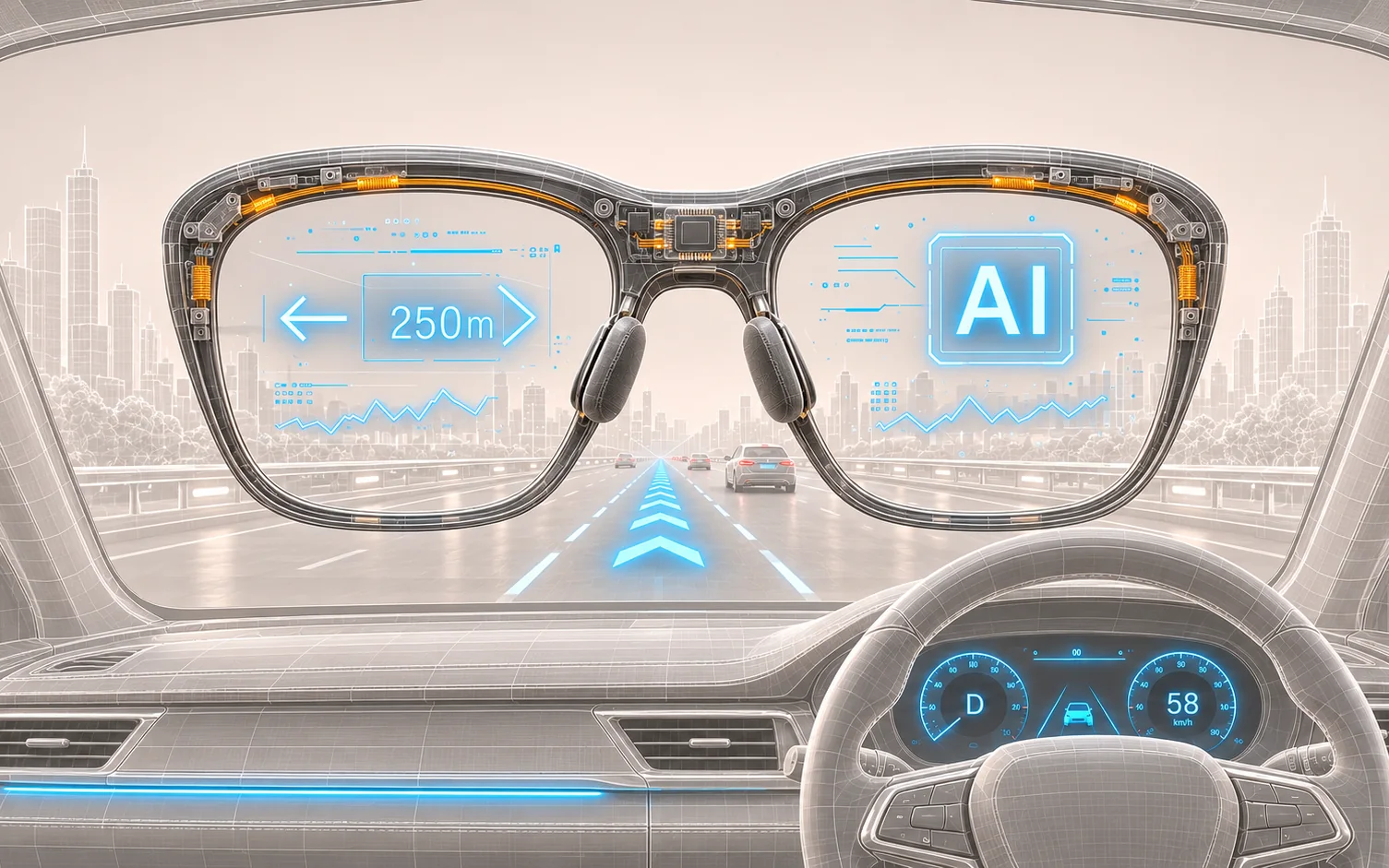
A pair of glasses that can take a call, read out a message, describe what is in front of you and, in the newest models, put a small screen in the corner of your eye. As a piece of technology it is remarkable. As something to wear while driving, we think it is a bad idea, and the law in Britain already leans the same way.
The pull is obvious
Most of us have learned to leave the phone alone at the wheel. AI glasses quietly undo that habit. There is nothing to pick up, so it does not feel like using a phone. Notifications arrive where your eyes already are. The assistant is always listening. That convenience is exactly the problem: a glance at a message in your lens is still a glance away from the road, and a conversation with an assistant still takes part of your attention.
What the law already says
There is no special smart-glasses law, and we doubt one is needed. The rules are about the driver, not the gadget:
- You can get 6 penalty points and a £200 fine for holding and using a phone, sat nav, tablet or any device that can send and receive data while driving.
- Hands-free is allowed, but only if you never hold the device, and you must still be in full control of the car at all times.
- Police can stop a driver who seems distracted, and not having proper control or a full view of the road can bring 3 points on its own. Careless driving can mean more.
When Google Glass appeared in 2013, the Department for Transport’s response was the same: it said a range of offences already exist to deal with drivers who do not pay proper attention to the road, and that it was talking to the police about drivers using the technology. More than a decade on, that still holds. If your glasses are drawing your attention away from driving, you are the one answerable for it.
Where they could help
We are not against the technology. Audio-only use, such as hands-free calls or turn-by-turn directions through speakers in the arms, is little different from a Bluetooth headset, provided you set it up before you set off. Car makers are also building heads-up displays designed, tested and approved for driving, projecting only what matters onto the windscreen. That is the right home for driving information: built for the job, not borrowed from a social feed.
Our view
Wear them as a passenger. As a driver, switch off notifications and the display, or take them off. The test is simple: if it would be wrong on your phone, it is wrong in your glasses.