For a century, what made one car better than another was mostly mechanical: the engine, the gearbox, the suspension. In an electric car with assisted driving, a growing share of what you’re paying for is a computer chip. And chips don’t age like engines.
The TOPS race
Carmakers now quote chip performance in TOPS, trillions of operations per second, the way they once quoted horsepower. The numbers are climbing fast.
- NVIDIA DRIVE Orin, the chip behind many of today’s assisted-driving systems, is rated at 254 TOPS.
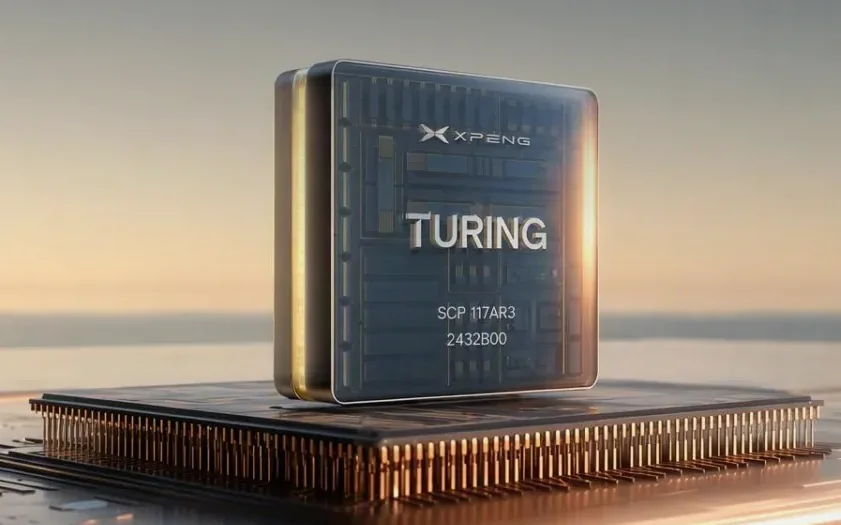
- XPENG’s own Turing chip is designed in-house. XPENG says its cheapest car, the 2026 Mona M03, gets “up to 750 TOPS”. Its new P7 can have one, two or three Turing chips, and the G7 SUV uses three for a quoted total of about 2,200 TOPS.
- NVIDIA DRIVE Thor, the successor to Orin, is quoted at up to 2,000 TOPS.
Treat these as headline figures, not a league table. Companies measure TOPS in different ways, and NVIDIA quotes Thor’s 2,000 at a lower-precision setting that flatters the number. What matters is the direction: in about three years, the top tier has gone from hundreds to thousands.
Why this changes buying
That pace looks a lot like Moore’s law, the observation that chip power roughly doubles every couple of years. If a car’s driving brain follows the same curve, three things follow.
Your car’s ceiling is fixed on the day it’s built. Over-the-air updates are real, and Chinese brands use them well. But software can only do what the hardware allows. A car with one chip will never do what the three-chip version does, however many updates it gets.
Trim levels become chip levels. XPENG already sells the same car with one, two or three chips at different prices. Choosing a trim is starting to mean choosing how long your car’s assisted driving stays competitive.
Values may follow the chip, not the badge. If buyers start asking “which chip?” of used cars, an older-generation car could lose value faster than its condition suggests.
So, lease rather than buy?
There’s a strong case for it. With a lease or PCP, the finance company carries the risk of the car losing value, and you can move to the next generation in three or four years. Anyone who wants the latest assisted-driving features should take that seriously.
But it isn’t the whole story. In the UK today, the assisted-driving features you can actually use are limited by law, not by the chip. Hands-off driving is allowed only on approved motorway systems, and true self-driving law isn’t due until the second half of 2027. A 2,000 TOPS chip doesn’t let your car do more on the M25 than the rules allow. Meanwhile the battery, not the chip, is still the biggest single factor in a used electric car’s value. And Auto Express’s analysis of residual value forecasts suggests Chinese-brand cars are currently holding their value about as well as everyone else’s.
Our take
The car is becoming partly a chip product, and that should change how you shop:
- Ask which chip a UK-spec car has, and how many. It can differ from the Chinese version.
- If you buy outright, buy the hardware you’ll want in five years, not just today.
- If you change cars every three years anyway, or care about having the newest driving tech, a lease is the safer bet.
For most UK drivers, though, the chip matters less today than the battery, the warranty and the price. That balance will shift as the law catches up with the hardware, and when it does, the case for leasing will get stronger.