Pony.ai, the Chinese company that runs driverless taxis in several Chinese cities, has reported a sharp rise in income from its robotaxis in the three months to 30 September 2026. Its quarterly results, published on 18 November, also give the clearest sign yet of its plans for the UK.
The numbers
Pony.ai’s fleet stood at 2,768 robotaxis at the end of September. It is aiming for 3,500 cars in 20 cities around the world by the end of the year, so it would need to add more than 700 in the final quarter.
Total revenue for the quarter was US$44.6m (about £34m at 7 Nov 2026 rates), up 75% on a year earlier. Bloomberg reports that this was ahead of the US$37.5m analysts had expected. Of that, robotaxi services brought in US$17.8m (about £13.7m), 165% more than a year earlier and around 40% of the total. Pony.ai says its revenue from fare-charging rides grew by nearly 400%. Its robotruck business, hauling freight, was slightly larger, at US$18.0m.
The company is still a long way from profit. It lost US$68.7m on its operations in the quarter, and its overall net loss was US$136.3m, which it puts mainly down to falls in the value of investments it holds. It had about US$1.15bn (about £885m) in cash and investments at the end of September.
For the full year, Pony.ai expects robotaxi revenue to reach three and a half times its 2025 level.
Where the cars run
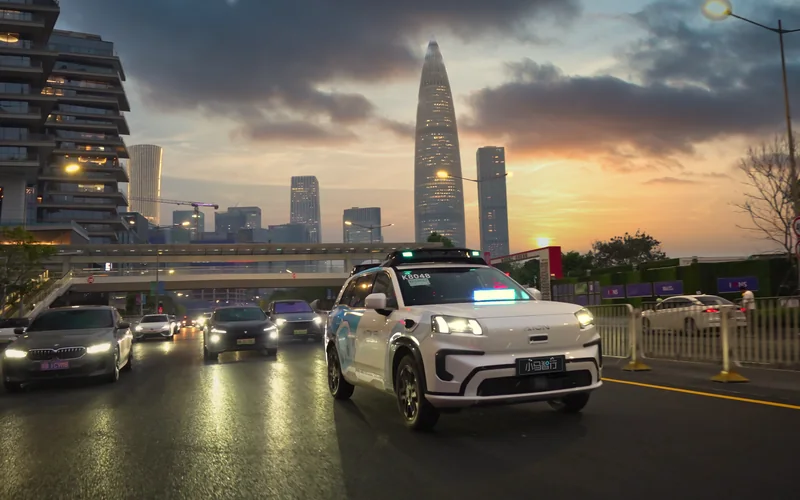
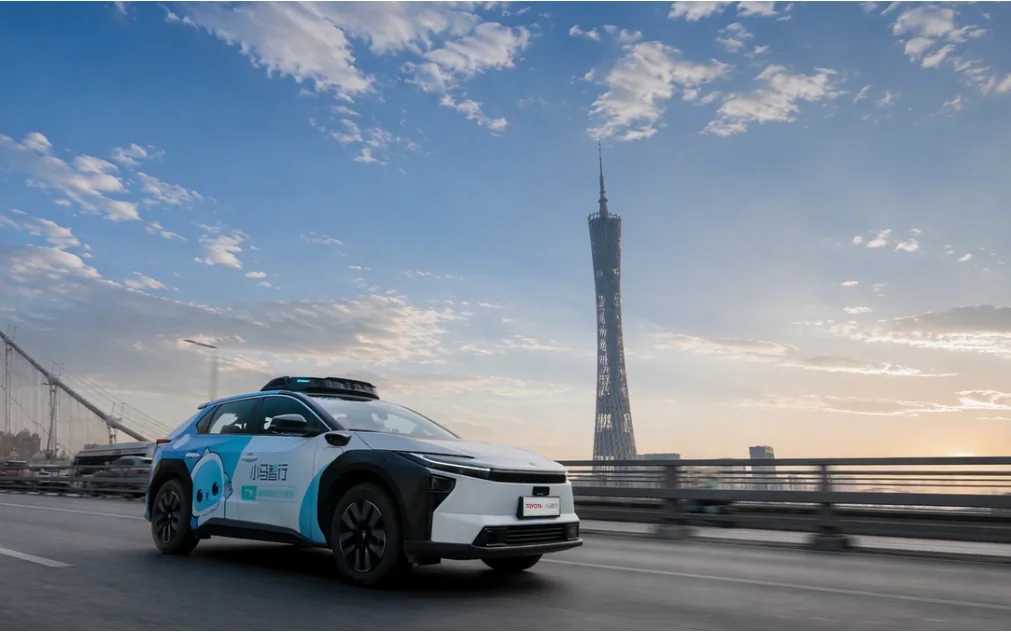
In China, Pony.ai says all three of its seventh-generation robotaxis, built with BAIC, GAC and Toyota, now carry paying passengers with no one in the driver’s seat. In Guangzhou its continuous service area now covers more than 1,000 square kilometres. It has also started deploying in Hangzhou, Chongqing and Hengqin, next to Macau.
In September it also started offering driverless test rides to invited passengers in Zagreb, Croatia, which it describes as a European first.
Manchester first, then London
The UK features in these results by name. Pony.ai says it is “advancing deployments in London and Manchester”, and its cars are already being tested on the road in Manchester. Bloomberg adds that a Citi note before the results said management is aiming for wider commercial launches in the UK and Europe in 2027. Bloomberg notes that European approvals remain uncertain.
What it means for the UK
When we covered Pony.ai’s plan with Uber for more than 2,000 European robotaxis on 7 November, the UK wasn’t named. It now is: Chinese-developed self-driving cars are being tested on public roads in Manchester.
Testing is not a passenger service, though. Pony.ai hasn’t given a date for paid rides in either city, and to carry the public it would need an automated passenger services permit, a scheme whose rules for England are set out in regulations that came into force on 15 May 2026. The 2027 timing comes from an analyst note reported by Bloomberg, not from Pony.ai itself.
The questions UK riders and regulators will ask are the same ones raised for any operator: how the system is shown to be safe on British roads, who is responsible when something goes wrong, and how data from cars developed in China is handled here. Pony.ai’s results don’t answer those yet.