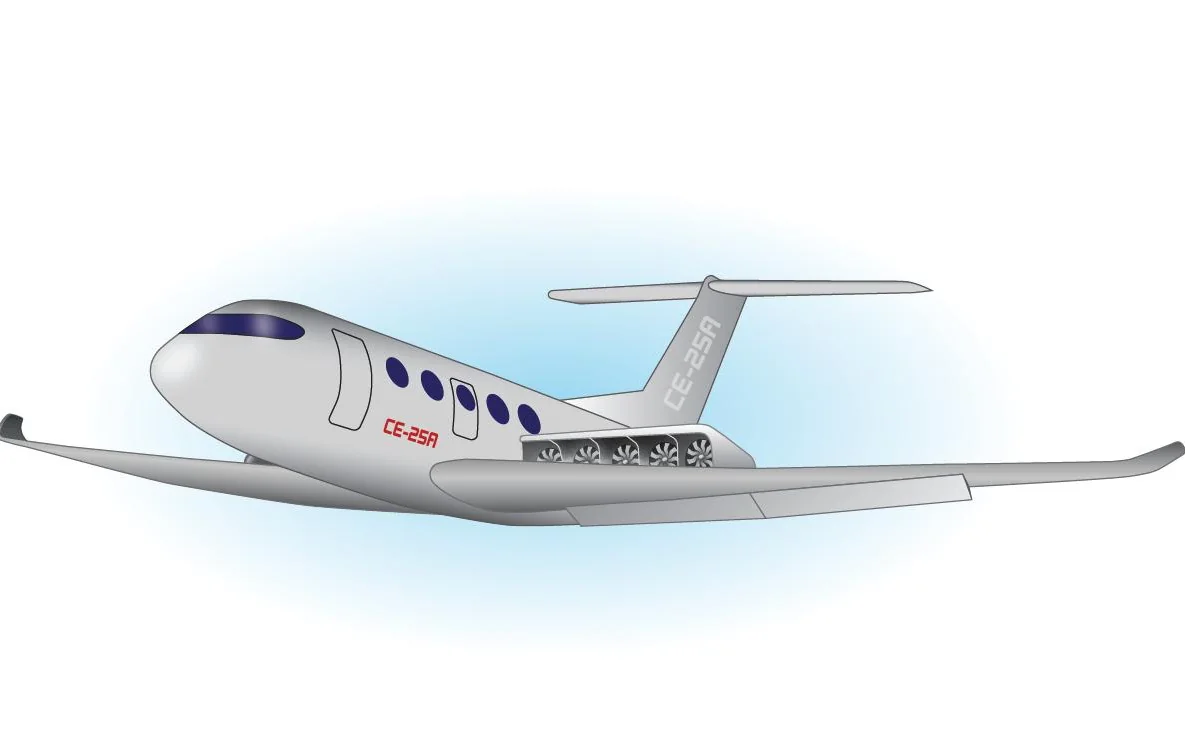
China’s state-owned planemaker Comac has flown its CE-25A electric commuter aircraft with people on board for the first time. Two pilots and a flight-test engineer took the plane up at Binzhou, in Shandong province, on Saturday 14 November. State media, citing Comac, said all systems worked normally and the aircraft met its expected performance.
State broadcaster CCTV put the flight at 16 minutes 38 seconds, covering about 37.5 miles, according to Airways Magazine. That is a short first hop, well below what the aircraft is meant to do.
Autonomous flights came first
The crewed flight was not the aircraft’s first time in the air. The CE-25A first flew on 2 February without anyone on board, and has since completed 19 uncrewed autonomous test flights. Xinhua describes Saturday’s flight as its first “manned intelligent flight”.
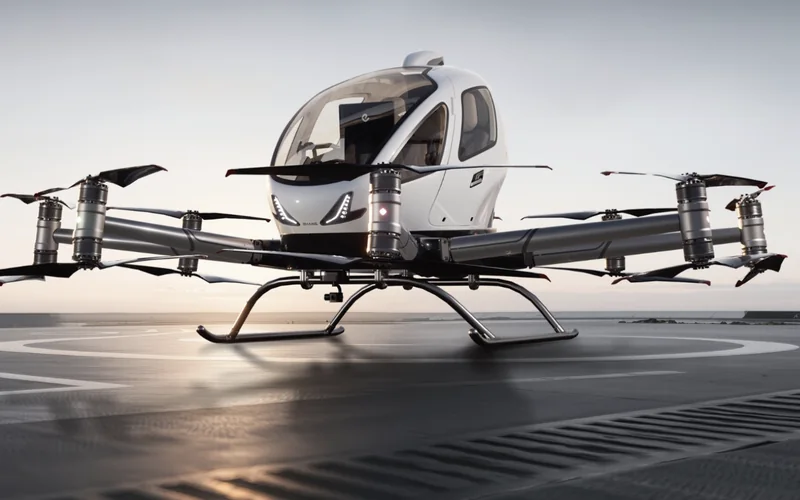
The autonomous test programme fits China’s wider push into pilotless flight, which also includes passenger drones, such as EHang’s EH216-S, which we covered earlier this month.
What the CE-25A is
- Size: up to 19 passengers, with a maximum take-off weight of about 10 tonnes.
- Power: fully electric. Photos show ten ducted fans mounted along the wings, five on each side, rather than conventional propellers.
- Targets: Comac is aiming for about 250 miles of range (400 km), a cruising speed of about 186 mph (300 km/h) and a cruising altitude of about 7,900 feet.
- Use: short intercity routes.
Comac first showed the design as a model in Shanghai in 2023. The full-size aircraft only came to light in late October, when photos of it on a taxiway appeared on Chinese social media, as Leeham News reported at the time.
Comac developed the aircraft with Shanghai Jiao Tong University and other partners. In 2023 it also set up a joint venture with battery maker CATL to work on electric aircraft, but neither company has confirmed whose batteries are in the CE-25A.
Certification is the long part
China’s Civil Aviation Administration has accepted Comac’s application for a type certificate, the approval an aircraft needs before it can carry paying passengers. Acceptance only starts the review. Comac has not given a date for passenger service.
How it compares
The CE-25A is not the first large electric aircraft to fly this year. Heart Aerospace, based in Los Angeles, flew its X1 demonstrator on batteries alone for 27 minutes on 12 August, from Plattsburgh in New York State. The X1 is heavier, at more than 25,000 lb (about 11.3 tonnes) at take-off.
Heart is taking a different route for its production aircraft: the 30-seat ES-30 will be hybrid-electric rather than battery-only. Heart is targeting entry into service in 2031.
What it means for the UK
Nothing yet. No airline has announced plans to fly the CE-25A outside China, and it has not been certified anywhere. Any Chinese-built aircraft would need its own approval before flying passengers in the UK.
The type of flying it is designed for does matter here, though. Short regional and island routes are where battery planes make most sense, because today’s batteries limit range. The CE-25A’s 250-mile target would cover many UK domestic hops on paper, but it is a target, not a demonstrated figure.
The bigger signal is speed. As with its cars, China is moving quickly from concept to flying hardware, and testing autonomy along the way. We will follow the certification process and report when there is real data on range and passenger service.