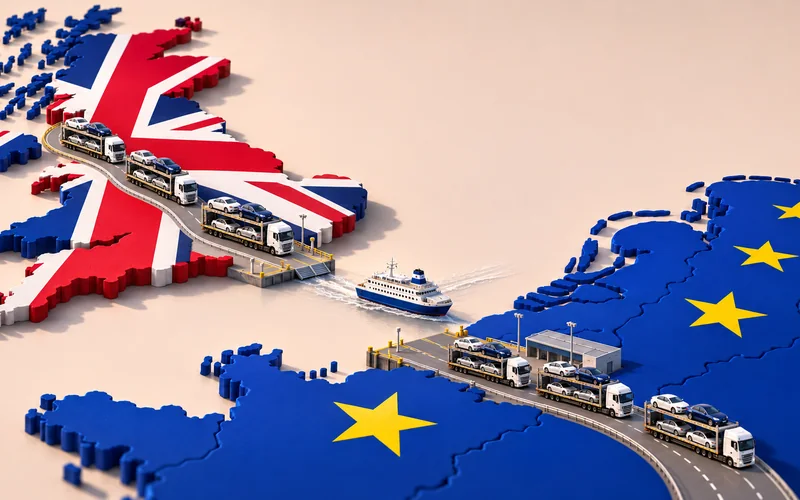
The UK and the European Union have put electric vehicles in writing, but not a tariff. The joint statement issued after their summit in Brussels on 20 November names steel and electric vehicles as supply chains to be handled together. It says nothing about China, tariff rates or start dates.
What the statement says
The relevant text is in paragraphs 70 to 72 of the statement, published on gov.uk. Both sides say they will cooperate on resilient supply chains and limit the harm their own trade measures do to each other. Where they agree to cooperate on a particular supply chain, the UK “would ensure outcomes consistent with the relevant EU measures”.
Steel and electric vehicles are among the supply chains named. The stated aim is supply that is more diverse and more resilient, with safeguards against circumvention. Progress is to be reviewed every four months, in particular for those sectors. Paragraph 72 separately promises both sides’ steel industries protection against the trade effects of overcapacity; it does not say whose overcapacity.
What it leaves out
The statement does not name China. It sets no tariff, no rate, no start date and no list of vehicles. It does not mention the EU’s “Made in Europe” rules, or the tougher UK-EU rules of origin that our earlier story reports for 1 January.
Reuters reports that a main British aim was special status under the “Made in Europe” rules, particularly for cars, and that the EU would grant it only if Britain aligns with its policies. It says the final wording seems to allude to a Franco-German proposal tying EU-funded purchases of British cars to alignment with EU trade protections. Alignment, Reuters adds, could oblige Britain to follow the EU on Chinese-built hybrids and battery-electric cars, a step London has so far resisted. The statement itself says none of this.
Prime Minister Andy Burnham called the agreement good for both sides, and said the package was probably about as much as could be achieved in this parliament, according to Reuters. Reuters does not link the remark to cars.
What does this mean for UK buyers?
Nothing changes at the till. The statement sets no duty, so nothing in it changes the price of any Chinese-built car. The UK has not adopted the EU’s extra duties on Chinese-built electric cars, and Reuters says London has so far resisted.
What has changed is the stated direction. Where the UK and EU agree to cooperate on a supply chain, the UK says it would ensure outcomes consistent with EU measures, and electric vehicles are one of the supply chains named.
Unknown: whether the UK will adopt EU-style duties, at what rates, from when, and on which vehicles. The four-monthly reviews are the next checkpoint.